
Workflow-First Ecommerce Packing Table for Faster Fulfillment
By Taro Nakamura • 17th Sep
Quick answer
The fastest, most dependable ecommerce packing table is designed around the fulfillment workflow—not a universal bench layout or fixed dimensions. Map how orders arrive, what happens at the station, and where completed parcels go; then place tools, supplies, weighing, printing, and verification around that sequence.
- Short answer: Keep frequently used materials accessible, maintain a clear active work area, and design repeated tasks within the ergonomic power zone: above the knees, below the shoulders, and close to the body.
- Key distinction: A stable scale setup and workflow-based equipment placement matter more than copying a left-to-right layout. Scale capacity should cover the heaviest realistically expected fully packed shipment.
- Important caveat: Evidence does not establish universal bench dimensions, surface-material advantages, or measured fulfillment-time savings. Observe the actual operators and order mix, and verify carrier and software requirements separately.
A shipping station bench is not just a surface with tape and boxes on it. In a workflow that uses the station for those tasks, it can be where an order is checked, protected, weighed, labeled, documented, and routed onward. If that sequence is unclear, or if the supplies fight the operator, the table becomes the constraint instead of disappearing into the work.
The practical goal is not a fashionable warehouse packing bench. It is a repeatable station built around the work you actually perform, the parcels you actually ship, and the movements your body repeats all day. Overbuild the interface; let precision handle the finesse.
FAQ: What does "workflow-first" mean for a packing table?
It means starting with the work, not the furniture.
Warehouse-packing guidance describes the station's possible jobs as consolidation, final checks, packaging, labeling, documentation, and shipment sorting. Your operation may use all of those functions or only a few. Define them before deciding where the scale, printer, materials, and computer belong.
Then map these things:
- How an order reaches the station
- What happens at the station
- How the completed shipment moves onward
That simple map is more useful than copying someone else's layout. It reveals whether a workstation needs room for an order awaiting packing, an active carton, a scale, or documents, and whether a finished parcel has a deliberate next destination in the process.
A good order fulfillment workstation makes its sequence visible. The operator should not have to invent the next step every time an order lands on the bench.
The best station is unremarkable in use: it holds the work, keeps the essentials accessible, and recovers cleanly for the next order.
I learned that distinction after a portable bench folded during a glue-up on a set build. Clever portability was irrelevant once the interface failed. The replacement was ugly, overbuilt, and completely forgettable afterward (which is exactly what a production bench should be).
FAQ: How should the work flow across an ecommerce packing table?
There is no evidence-backed universal left-to-right or right-to-left layout. Place tools and materials according to frequency of use, sequence of use, and the force required to use them.
Start with the active work area
Reserve the central working area for the parcel being handled now. Avoid making the active area a permanent storage shelf; it needs to support the task at hand without forcing constant relocation.
Place frequent items for easy access
Packing-station guidance is blunt on this point: the more critical a tool or material is, the easier it should be for the operator to reach. Put the items used on most orders where they are readily accessible during the work sequence. Less-used supplies can live farther away in organized shelving or bins.
This is the useful core of packing table organization. This is the useful core of packing table organization. For a deeper look at matching storage configurations to specific work patterns, see this guide to workflow-optimized bench storage. It is not about a prescribed bin color, a universal labeling system, or a social-media-perfect wall. It is about making the materials needed for current work available without turning every action into a search.
Treat incoming and downstream flow as design inputs
You do not need to impose a rigid three-zone diagram on every small operation. You do need to account for where work arrives and where it goes after packing. If those paths cross the active work area repeatedly, the layout is asking the operator to work around the station rather than through it.
FAQ: What ergonomic rules matter most when packing orders?
Repeated manual handling can involve awkward posture, repetitive movement, forceful exertion, pressure points, and static postures. That is the failure mode to design out.
The most useful guideline is the manual-handling power zone: work above the knees, below the shoulders, and close to the body. Apply it to the actions that recur throughout the day (handling orders, opening cartons, placing contents, taping, and moving completed parcels).
Do not copy a fixed bench height blindly
The collected guidance does not establish one correct numeric height, depth, width, or reach distance for every shipping station bench. It does support observing the work and getting input from the people who use the station. If multiple operators use the same workstation, height-adjustable benches are one option that can allow adjustment to individual needs. If multiple operators use the same workstation, height-adjustable benches are one option that can allow adjustment to individual needs. A guide to adjustable-height workbenches can help compare manual and electric systems before you choose a station.
Run a simple observation before committing to a table:
- Which actions are repeated most often?
- Which items require the most force to handle?
- Where does the operator reach, bend, twist, or hold a posture?
- Do frequently used supplies stay close, or do they demand repeated extension?
- Does the station fit the actual order mix, including its heaviest finished parcels?
Ergonomic changes can lower the physical demands of manual-handling tasks. Ergonomic changes can lower the physical demands of manual-handling tasks. Review these workbench safety features as part of a broader effort to reduce slips, strain, and other avoidable hazards around the station. They are not a promise of injury prevention or a substitute for examining the real work.
FAQ: Where should the shipping scale go?
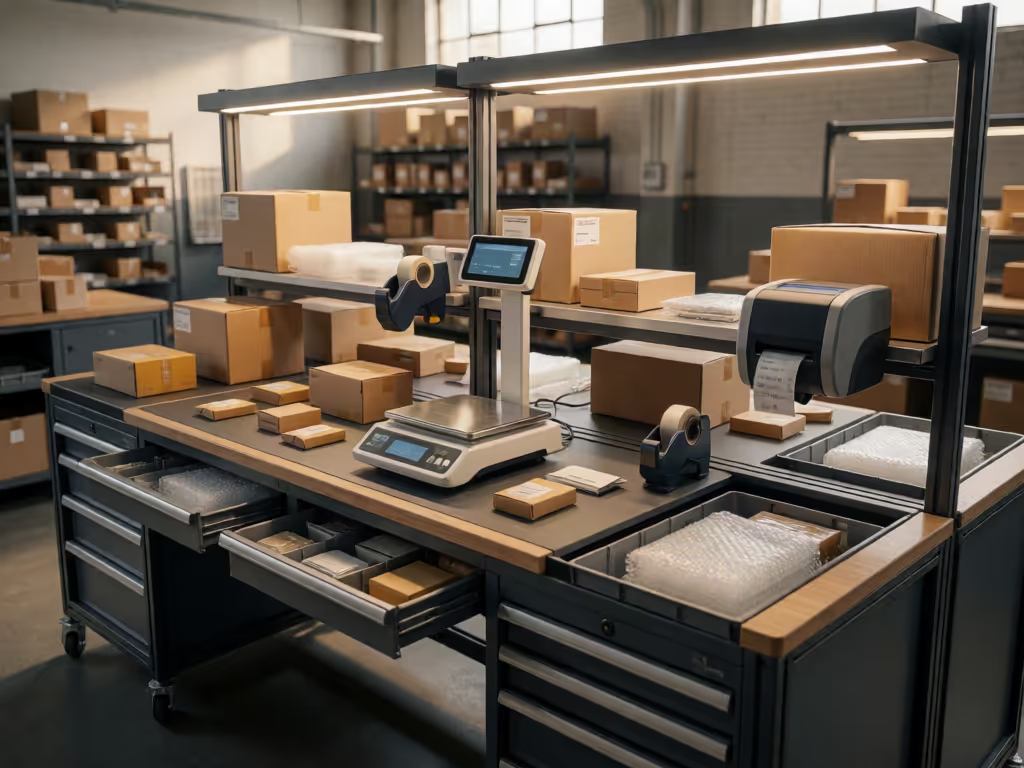
The scale deserves its own uncompromised setup. It should sit on a hard, flat, stable, rigid surface. A parcel on the scale should not touch a wall, shelf, floor, other box, or any outside support, because that contact can alter the weight transferred to the scale.
Choose scale capacity around the heaviest fully packed shipment you realistically expect to send, not merely the product weight. The finished shipment may include the item, carton or mailer, protective material, inserts, tape, and label.
For large cartons, an integrated display may be covered. A remote display can be useful in that case. The core requirement remains the same: provide a stable weighing position that accommodates the real completed parcel without outside contact.
Confirm current requirements with the relevant carrier or shipping platform, and follow the instructions for the specific scale in use.
FAQ: How should printing and verification fit into the station?
Printing should support the work sequence rather than create a document chase across the room. Some shipping software allows printer assignment by packing station and document type. For example, Picqer documents configuration of separate printers for packing lists, shipping labels, shipping documents, and product or location labels at each workstation. That is software-specific behavior, not a universal shipping-platform feature.
The broader lesson holds: decide which documents are produced at the station, then configure and position equipment so the operator can handle those documents in the intended workflow.
Build a verification point into packing
Scan-to-pack systems can verify that an item belongs to an order before it enters the carton. That is a useful control where the required product data, labels, software rules, location structure, training, and reporting are in place. A scanner by itself is not the system.
For a shop considering scanning, ask one results-first question: At what point in the process can the system still stop the wrong item from being packed? Place the verification step there, rather than treating scanning as a ceremonial final action.
FAQ: What storage belongs on a warehouse packing bench?
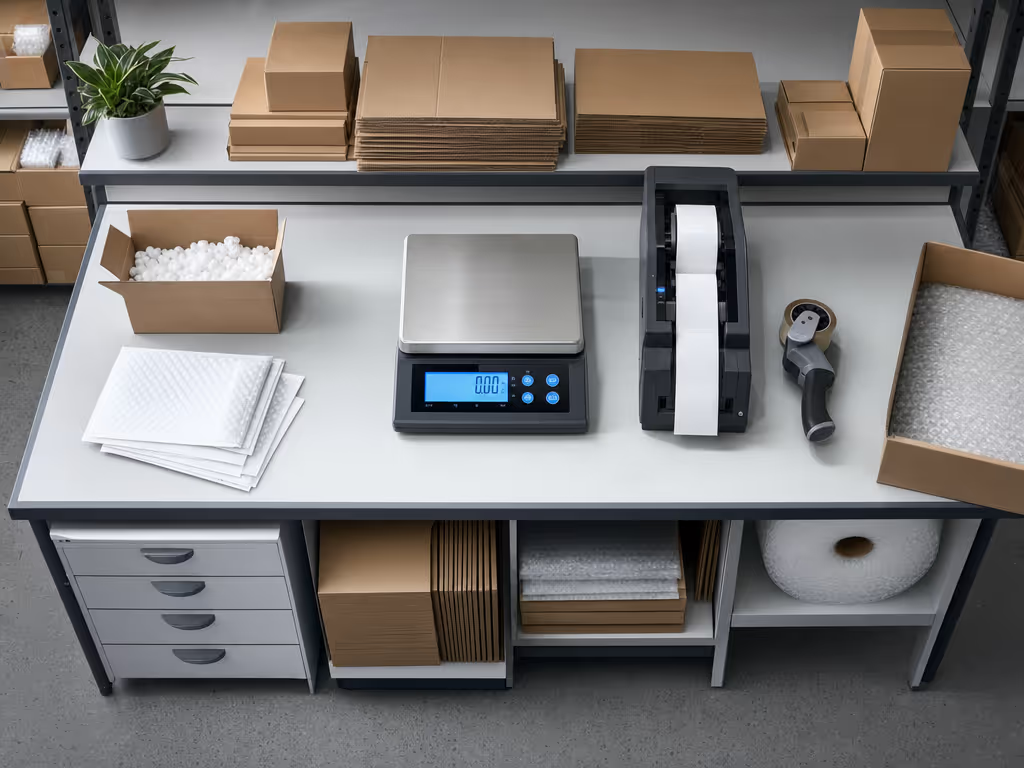
Organized shelving and bins with easy access to packing materials are supported packing-station principles. The point is accessibility, not a universal storage recipe. Your stock should reflect your actual order mix and the materials used in the defined work sequence.
A maintenance-minded setup also makes replenishment visible. When a commonly used material has no defined home, it migrates onto the work surface, gets buried, or disappears at the wrong moment. Give each necessary supply a serviceable location that can be restocked without dismantling the station.
Serviceable beats sealed. Favor an arrangement you can inspect, clean, move aside, and revise after observing live work. A fixed, elaborate layout that cannot accommodate a change in cartons, inserts, or order mix is not efficient; it is merely difficult to alter.
FAQ: Is a rolling workbench a good choice for fulfillment?
A rolling workbench may be attractive where space must do double duty, but the available guidance does not establish its stability, load behavior, or suitability as an ecommerce packing table. The available guidance also does not establish how mobility affects fulfillment performance. If the bench must roll, see this guide to workbench caster systems.
Before choosing one, map exactly why the station must move and observe the work at its intended operating position. If the business needs a dedicated packing location, a centralized station provides a defined area for packing activities. If it must share space, evaluate the workflow after each relocation rather than assuming the table will perform the same in every position.
Summary and Final Verdict
A faster, more dependable ecommerce packing table begins with a workflow map, not a catalog page. Define the work performed, account for how orders arrive and leave, keep frequently used tools and materials easy to access, protect a rigid weighing area, and add verification at a point where it can still catch the wrong item.
Do not chase a universal layout, fixed dimensions, or unproven time-savings claims. Observe the actual operator and order mix, then revise the station around repeated motions and recurring failures. The final verdict: build the shipping station bench as a durable interface for a known process. When it is organized, accessible, and easy to maintain, it stops demanding attention and lets fulfillment move.
Related Articles