Gladiator GAWB04HW Review: 3,000 lb Stable Adjustable Bench
By Maya Iqbal • 3rd Oct

Bottom line
The Gladiator GAWB04HW is a sensible shortlist candidate if you need a compact bench with a 48 × 25-inch overall footprint, 27.5–40.8-inch adjustable height, solid hardwood top, welded-steel legs, and a 3,000-lb maximum distributed-load rating.
- Best for: Buyers whose main filters are footprint, height adjustability, hardwood construction, and published distributed-load capacity. View on Amazon
- Skip it if: You need documented flatness, clamp integration, point-load performance, vise suitability, or verified resistance to racking and deflection.
- Main limitation: Assembly is required, and product-specific testing for wobble, stiffness, top feel, adjustment procedure, and real-world load behavior was not available. Inspect and test the assembled bench before relying on it for precision work.
Important: The 3,000-lb figure is the manufacturer’s maximum distributed-weight rating; it is not evidence of point-load or dynamic-load performance.
This Gladiator GAWB04HW review looks past the headline number and asks the questions that matter at the bench: what does this Gladiator tool bench actually document, what remains unmeasured, and where should you verify performance before committing it to precision work? The GAWB04HW is a 4-foot adjustable-height hardwood workbench with a manufacturer-stated 3,000 lb maximum distributed-load capacity. That is a substantial load rating. It is not, by itself, a stiffness, flatness, or racking-resistance result.
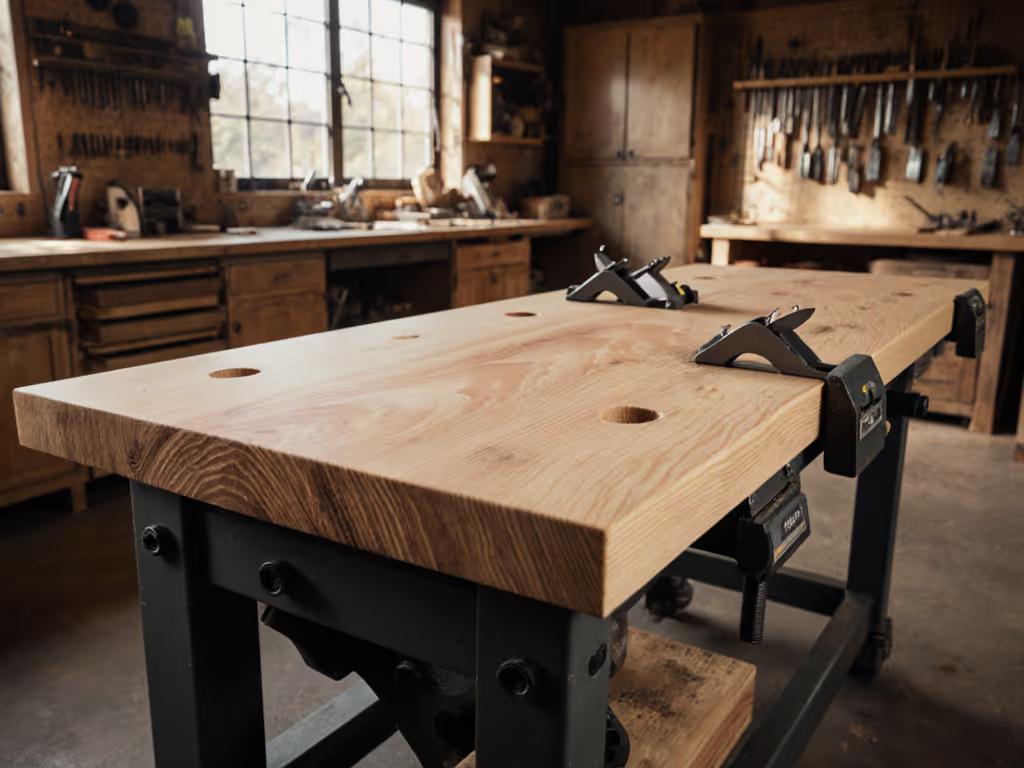
The product's documented case is straightforward: a 48 in wide × 25 in deep overall footprint, 27.5-40.8 in overall adjustable-height range, solid hardwood top, and heavy-duty welded-steel legs. For a shop that needs height range and a compact bench footprint, those are meaningful starting numbers. But a bench is a machine, not furniture. Measure, don't guess.
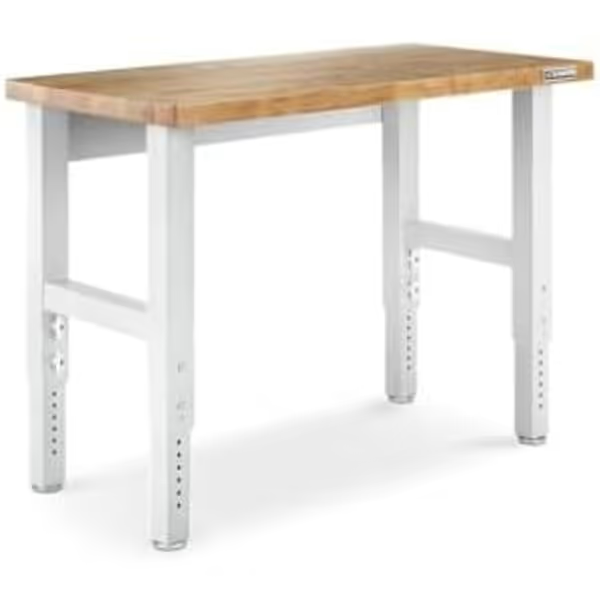
Gladiator 4' Adjustable Workbench
Heavy-duty, adjustable workbench adapts to your body and tasks.
0
Weight Capacity3,000 lbs
Weight Capacity3,000 lbs
Pros
ADA-compliant adjustable height for ergonomics.
Exceptional 3,000 lb distributed weight capacity.
Durable hardwood top for tough projects.
Cons
Warranty varies between components.
Specifics on flatness or racking not provided.
The short verdict
The Gladiator 4' Adjustable Height Hardwood Workbench, GAWB04HW is worth considering when your first requirements are:
- An adjustable overall height range: 27.5-40.8 in.
- A defined overall footprint: 48 in wide × 25 in deep.
- A solid hardwood top.
- A high manufacturer-stated distributed-load rating: 3,000 lb per unit.
- Welded-steel leg construction.
The decision becomes less certain if your priority is quantified hand-tool performance, clamp integration, verified top flatness, or proven resistance to diagonal racking. No product-specific independent testing was available here for wobble, deflection, surface flatness, dynamic loading, point loads, vise mounting, or planing and chiseling forces.
The 3,000-lb figure establishes only the manufacturer’s maximum distributed-weight rating; product-specific evidence for racking or dynamic-load performance was not available. Do not use the 3,000 lb figure as a substitute for a racking test.
Plain-English takeaway: The GAWB04HW has strong published capacity and height-range numbers. Its precision-workbench behavior still needs to be checked in your shop.
Published specifications: what the numbers establish
Start with the documented numbers, not assumptions.
| Item | Documented specification | What it tells you | What it does not tell you |
|---|---|---|---|
| Overall width | 48 in / 1,219 mm | The bench's side-to-side footprint | Exact usable top area or overhang geometry |
| Overall depth | 25 in / 635 mm | The bench's front-to-back footprint | Exact usable top area or clamping clearance |
| Overall height range | 27.5-40.8 in / 699-1,036 mm | The available overall height window | Adjustment increments or adjustment mechanism |
| Height-range difference | 13.3 in / about 338 mm | The amount of stated height variation | Which specific heights suit your tasks |
| Top | Solid hardwood | Surface material is hardwood | Species, thickness, hardness, flatness, or feel |
| Legs | Heavy-duty welded steel, hammered finish | Leg construction description | Steel gauge, frame geometry, or racking performance |
| Capacity | 3,000 lb maximum distributed weight capacity | Manufacturer's evenly distributed-load limit | Point-load, impact-load, dynamic-load, or lateral-load performance |
| Assembly | Required | It does not arrive fully assembled | Tools, time, procedure, or assembly difficulty |
The advertised dimensions are overall product dimensions, not an independently documented exact work-surface measurement. That sounds like a small wording difference, but it prevents bad layout math. If you are planning a vise, clamp rack, appliance, or dedicated jig around the top perimeter, measure the delivered bench rather than designing from the overall footprint alone.
The load rating: useful, but narrow
A 3,000 lb maximum distributed-load rating is the most attention-grabbing number in the listing. Treat it accurately.
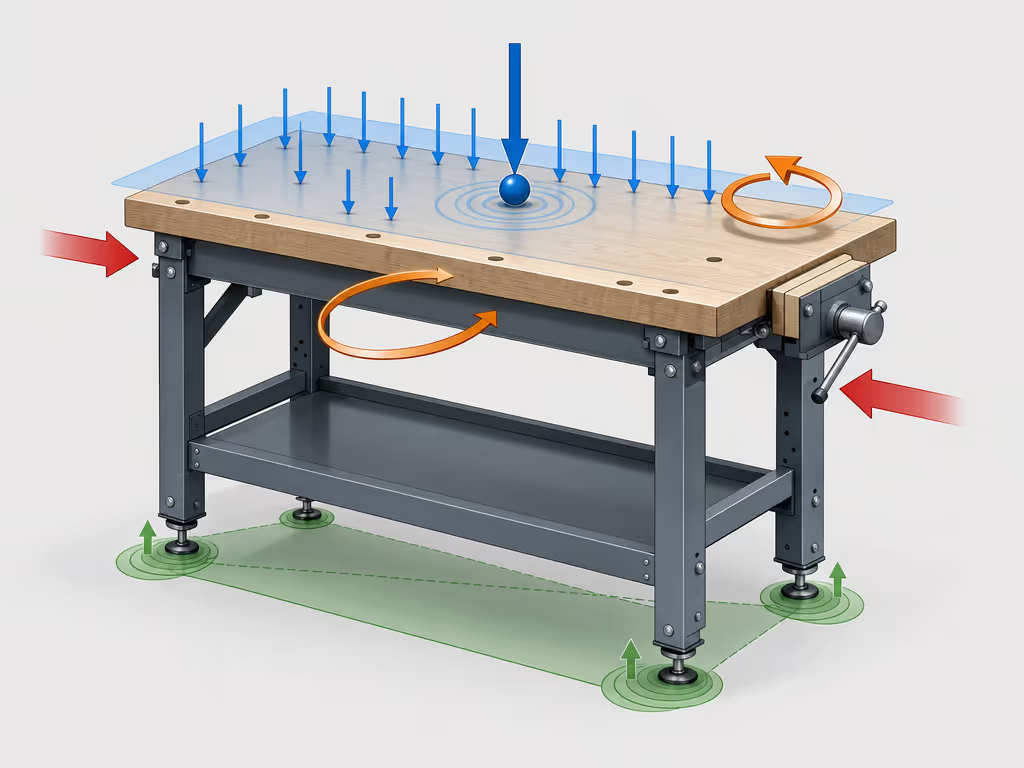
"Distributed" means the rating applies to load spread across the bench rather than concentrated at one small location. It does not supply a point-load rating or evidence of dynamic-load performance.
Those are different load cases:
- Distributed vertical load: Stored material or equipment spread across the bench.
- Point load: A concentrated load in a small area.
- Dynamic load: Force that changes during use.
- Lateral load: Side pressure that tries to slide the top relative to the floor.
- Torsional load: A corner-to-corner twisting force.
The distributed-weight rating is the published number discussed here. It is still useful information. It is simply not the whole stability story.
Comparative analysis: where this bench is documented well, and where it is not
A useful comparison does not need marketing labels such as "heavy duty" or "professional grade." It compares the bench's documented attributes against the forces and interfaces your work requires.
1. Height range versus ergonomic fit
The GAWB04HW's overall height adjusts from 27.5 to 40.8 in. That is a 13.3 in / roughly 338 mm range. If your existing bench is too low for standing tasks or too high for leverage-intensive tasks, a height-adjustable design gives you a variable to work with instead of forcing a single compromise.
But do not assume the height range automatically solves ergonomics. The published specifications do not state adjustment increments, the adjustment mechanism, or the exact procedure for changing height. They also do not establish whether adjustment can be made easily with a loaded top.
Use body-and-task measurements before assembly:
- Record your comfortable standing elbow height in shop footwear.
- Record the height of any neighboring outfeed or assembly surface you want to align with.
- Decide whether the bench needs one primary position or several repeatable positions.
- Confirm the final top height after assembly with a tape measure, not memory.
For a setup shared by different people, write down each selected height once you find it. Repeatability is more valuable than a vague claim that the bench is "adjustable."
2. Hardwood top versus unverified flatness and workholding
The bench uses a solid hardwood top, and Gladiator states that its UV-coated hardwood surface helps resist garage chemical stains. That chemical-stain statement is a manufacturer claim; no independent stain-resistance test is available here.
For bench work, the bigger questions are different:
- Is the surface flat enough for the parts you assemble?
- Does it remain flat through the conditions in your space?
- Can you clamp to the edges where you need to clamp?
- Can you mount your chosen workholding hardware without interfering with the frame?
Those answers are not supplied by the product description. Top thickness, hardwood species, flatness tolerance, dog-hole pattern, T-track provision, apron clearance, and vise-mounting details are not documented in the available information.
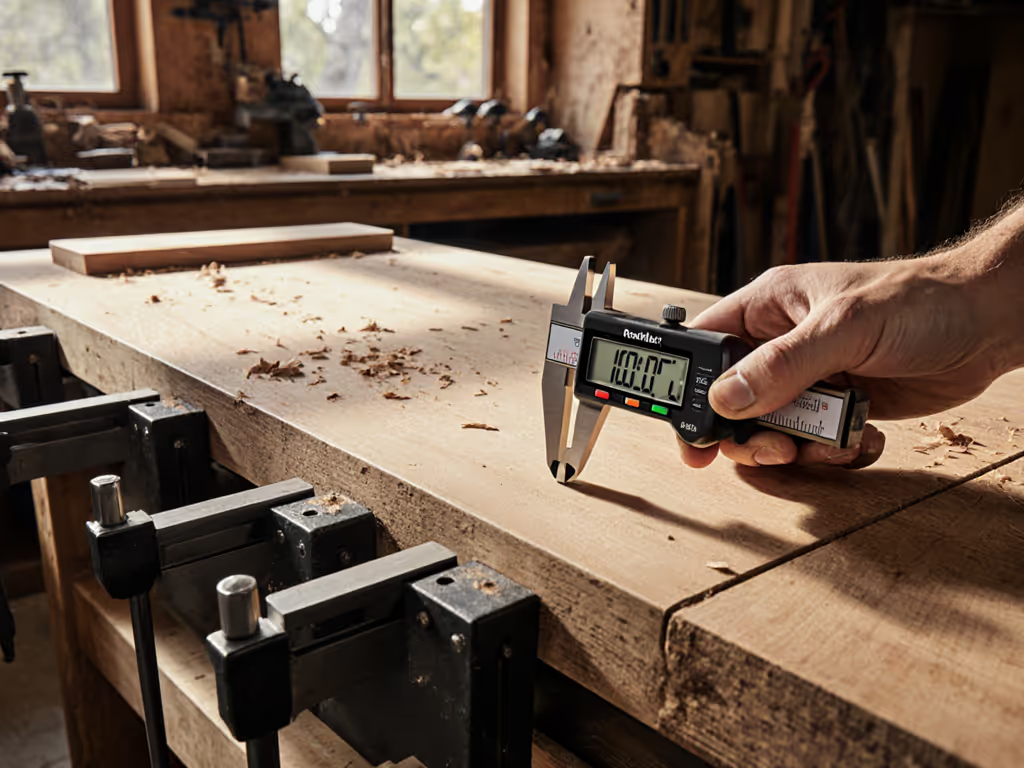
That does not make the top unusable. It means you should inspect it before assigning it precision duties. Put a known straightedge across the top lengthwise, crosswise, and diagonally. Use feeler gauges if you need a recorded result. Then repeat the check after the bench has lived in your shop environment.
Control the variables, and the numbers will explain themselves.
3. Welded steel legs versus measured racking resistance
Gladiator describes the legs as heavy-duty welded steel with a hammered finish. Welded steel is a construction fact. It is not a measured stiffness result.
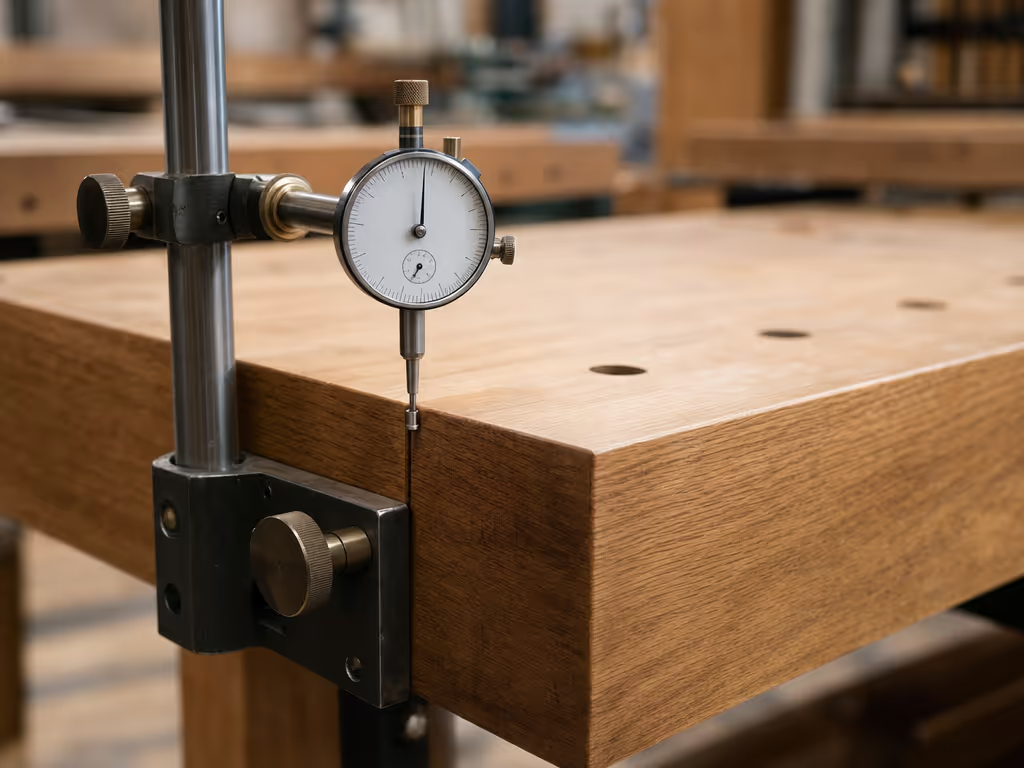
Racking is the side-to-side or corner-to-corner movement that turns clean layout lines into drifting work. Understanding the role of legs, stretchers, bases, and floor systems can help explain the engineering behind workbench stability. It is the reason two benches can look similar when empty and behave completely differently under load. I have watched that difference settle an argument quickly: sandbags went on two similar-looking benches, a dial indicator went against the corner, and one frame told a much less flattering story.
For this Gladiator workbench, no independent racking test, deflection test, wobble test, or dynamic-use test is available in the available information. So the correct conclusion is not "rock solid," nor is it "wobbly." The correct conclusion is unmeasured.
If hand-tool rigidity matters to you, test it after assembly and before you drill holes or add accessories.
A practical acceptance test for the GAWB04HW
You do not need a laboratory to distinguish a capacity number from a bench-performance result. You need a repeatable setup and notes.
Test 1: Initial surface check
With the bench assembled and unloaded:
- Place a known straightedge across the top in lengthwise, crosswise, and diagonal directions.
- Record the largest gap you can measure under the straightedge at each position.
- Mark the date, room conditions, and measurement locations.
This establishes a baseline. It is not a manufacturer tolerance test; it is your own reference for future checks.
Test 2: Corner-load movement check
Apply a controlled downward load near one top corner. Keep the load modest enough to handle safely and use the same load for every corner. Observe whether the bench shifts, twists, or changes contact with the floor.
For a better record, place a dial indicator against a repeatable reference point and note displacement. Repeat at all four corners. The goal is not to declare a universal pass/fail threshold. The goal is to find asymmetry and establish whether a change you make improves the result.
Test 3: Diagonal push test
With the bench empty, apply a consistent sideways push at the upper corner, then repeat from the opposite corner. Watch for diagonal movement and listen for fastener noise. If you have an indicator, record movement at the opposite corner.
Do not confuse this with the 3,000 lb rating. This is a separate assessment of the forces that cause racking. Because these checks involve loaded equipment and moving components, review essential workbench safety features before testing.
Test 4: Task-specific clamp trial
Before permanently committing to a vise or drilling the top, use your actual clamps and typical workpieces. Test the positions you use for edge glue-ups, assemblies, and temporary stops.
Document three outcomes: For additional ways to improve clamp access and workholding, see this guide to workbench add-ons.
- Where clamps fit without obstruction.
- Where the bench frame limits access.
- Whether clamping pressure causes visible movement or top distortion.
This is the fastest way to determine whether the wood garage workbench layout matches your workflow rather than an imagined one.
Who should put the GAWB04HW on the shortlist?
The GAWB04HW makes the most sense for buyers who can use the published attributes directly and are willing to validate the rest.
A reasonable shortlist candidate if you need
- A bench with a 48 × 25 in overall footprint.
- An overall adjustable height range from 27.5 to 40.8 in.
- A solid hardwood top rather than a generic unspecified surface.
- A manufacturer-stated 3,000 lb maximum distributed-load capacity.
- Steel legs described by the manufacturer as heavy-duty welded steel.
Pause before buying if your decision depends on
- A published top-flatness tolerance.
- Verified stiffness or racking-resistance measurements.
- Proven performance under hand-planing, chopping, pounding, or vise use.
- A documented dog-hole standard, T-track layout, or integrated vise interface.
- Confirmed leveling hardware or a specified leveling procedure.
- Known adjustment increments, adjustment hardware, or adjustment time.
- A documented assembly-tool list or assembly-time estimate.
Those are not trivial omissions for a bench buyer. Workholding and stiffness determine whether the bench supports accurate work or merely holds material off the floor.
Assembly, warranty, and model-name details
Assembly is required. The available information does not establish required tools, number of steps, assembly duration, or whether one person can manage it comfortably. Plan the installation around a final location where you can access every side during setup and testing.
You may see slightly different extended SKU forms attached to this bench, including GAWB04HWEG in Gladiator's workbench collection and GAWB04HWJW at another retailer, while the matched listing uses the base GAWB04HW name. The shared named product and core published dimensions/capacity are the useful comparison points. Do not assume suffix differences mean separately proven structural configurations.
One retailer listing states a one-year warranty for the hardwood top and a lifetime limited warranty for the adjustable legs. Because full warranty terms and exclusions were not reviewed here, verify current coverage directly before treating those claims as part of the purchase decision.
Final verdict: capacity is documented; stability must be demonstrated
The Gladiator GAWB04HW workbench has a credible published specification set for a compact adjustable-height garage bench: a 48 × 25 in overall footprint, 27.5-40.8 in overall height, solid hardwood top, welded-steel legs, and a manufacturer-stated 3,000 lb maximum distributed-load capacity.
That makes it a rational candidate when height range, footprint, hardwood construction, and distributed-load capacity are your main filters.
It is not yet a quantified answer for buyers who need proof of flatness, clamp access, lateral stiffness, corner deflection, or hand-tool resistance. The published load rating does not cover those questions. Buy it for the specifications it actually provides, not for performance claims the numbers do not establish.
Final recommendation: shortlist the GAWB04HW if its stated footprint and height range match your space, then inspect the delivered top and run a simple corner-load and diagonal-push test before building your workflow around it. That is the low-risk route: measure the surface, measure movement, and make the bench earn its place. Measure, don't guess.
Related Articles