OSHA Workbench Requirements: ANSI vs CE Workshop Compliance
By Taro Nakamura • 10th Dec
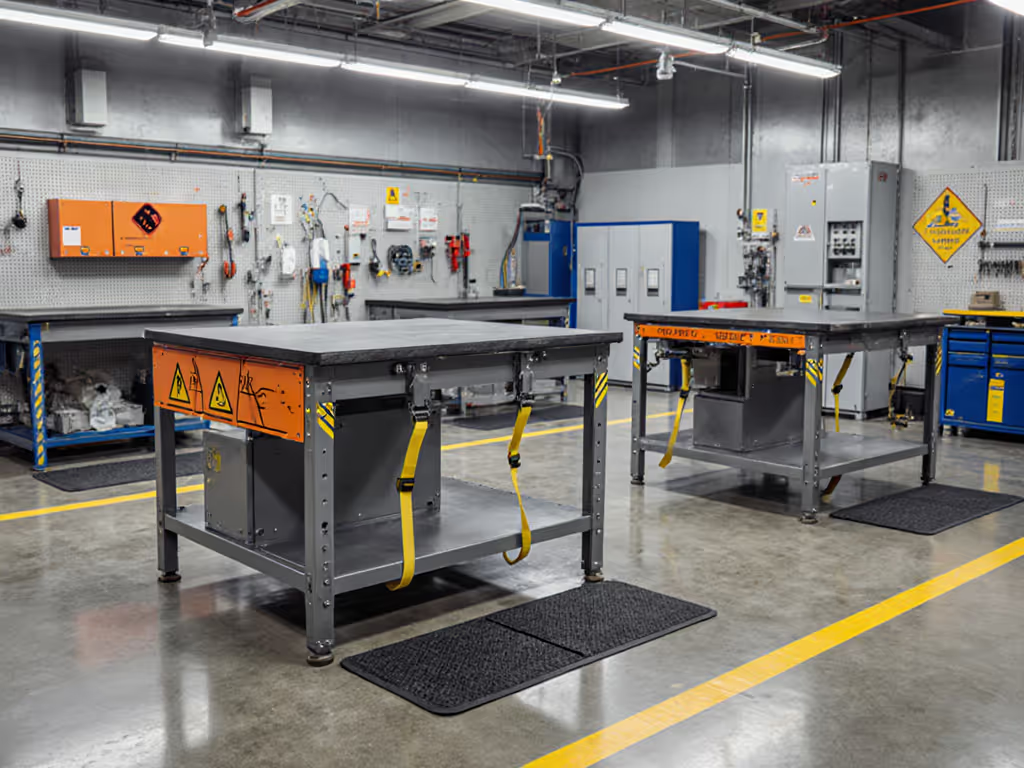
Let's cut through the noise: OSHA workbench requirements don't exist as a standalone regulation, but ignoring the indirect binding standards will cripple your shop's uptime. Workbench safety standards emerge from OSHA's General Duty Clause (Section 5(a)(1)), machine guarding rules (1910.212), and electrical compliance (Subpart S), not certification labels. After rebuilding a film set bench mid-shoot because the "portable" unit collapsed under clamping pressure, I learned this firsthand: compliance isn't about paperwork. It's about whether your bench survives the work without becoming the bottleneck. For a deeper dive into designing rigid bases and stretchers, see our workbench stability engineering guide. This isn't theoretical. It's a workshop compliance guide forged in humidity swings, 12-hour build days, and the cold reality that a bench's job is to disappear into the workflow. Let's dissect what actually matters for your daily grind.
FAQ: The Truth About Workbench Safety Standards (No Marketing Fluff)
Q: Does OSHA mandate "OSHA-certified" workbenches?
A: No, and that's the trap. OSHA doesn't certify anything. Its power comes from the General Duty Clause: employers must provide a workplace "free from recognized hazards." For workbenches, this means:
- Racking resistance (1910.212(a)(3)(ii)): If your bench twists under planing or assembly pressure, you're violating OSHA. I've seen vises rip out of MDF tops because builders prioritized cost over triangulation.
- Electrical safety (1910.305): Ungrounded outlets on steel frames? Instant hazard. For safe power planning and code-aware installs, see our workbench electrical integration guide.
- Stability (1910.176(b)(1)): If casters introduce flex that causes workpiece slippage (a "recognized hazard"), you're liable.
The myth of "OSHA-certified workbenches" is sold by vendors slapping logos on stickers. Reality check: Your local OSHA inspector will cite you if a collapsing bench injures a worker, even without a "workbench standard." Focus on demonstrable stability, not marketing.
Q: How do ANSI standards (like B11.19) actually help?
A: They translate OSHA's vagueness into testable performance. ANSI B11.19 specifies how to verify machine stability (critical for benches holding power tools). But here's what manuals won't tell you:
- Flatness tolerance isn't enough. ANSI tolerates 0.005" deviation per foot. But for glue-ups? That's inaccuracy you'll measure in ruined joints. I demand sub-0.002" flatness through field-tested methods (shimming, replaceable tops).
- Racking resistance > certification badges. ANSI-compliant benches should resist 1,000 lbs of lateral force without measurable twist. Test yours: clamp a dial indicator to the apron, push the top sideways. If it deflects >0.005", it's a failure-mode waiting to happen.
- Serviceability beats sealed designs. An ANSI certified workbench with welded joints can't be repaired after a forklift hit. A modular steel-frame unit? Replace the top. Serviceable beats sealed every time in the field.
Don't chase "ANSI certified" stickers. Demand verifiable data on racking resistance and flatness retention. If the vendor can't share test reports under load, run.
Q: How do CE safety standards (like Machinery Directive 2006/42/EC) differ?
A: CE focuses on foreseeable misuse (a gamechanger for workshops). While ANSI targets operators, CE assumes users will clamp sheet metal to a bench designed for woodworking. Key implications:
| Requirement | CE Machinery Directive | ANSI Practical Impact |
|---|---|---|
| Stability | Must resist tipping during expected misuse (e.g., side-loading) | Your bench needs wider footprint or mass, no "sleek minimalist" excuses |
| Guarding | Moving parts (e.g., height-adjust mechanisms) require guarding | Exposed gears = violation; expect frequent greasing access points |
| Electrical | Stricter grounding for ALL conductive surfaces | Steel frames must have dedicated ground paths, not just "bolted to concrete" |
CE isn't "better"; it's broader. A CE safety standard-compliant bench will often outperform ANSI equivalents in abuse resistance because it's designed for real-world workshop entropy. But note: CE compliance requires EU-based notified body validation. If your vendor lacks CE testing reports with actual load data, it's just marketing.
Q: How do I choose a "safety-certified workbench" that won't fail?
A: Prioritize failure-mode awareness over specs sheets. Stop asking "Is it certified?" Start asking:
- "How does it handle my worst-case load?" A 2,000-lb capacity means nothing if lateral force causes racking. Demand racking resistance specs (e.g., "<0.003" deflection under 500-lb side load").
- "Can I repair it in 30 minutes?" Overbuild the interface. Look for bolted connections, not glued, welded, or plastic snap-fits. That Global Industrial bench? Its C-channel legs bolt to the top. Replace the top after a glue calamity without rebuilding the frame.
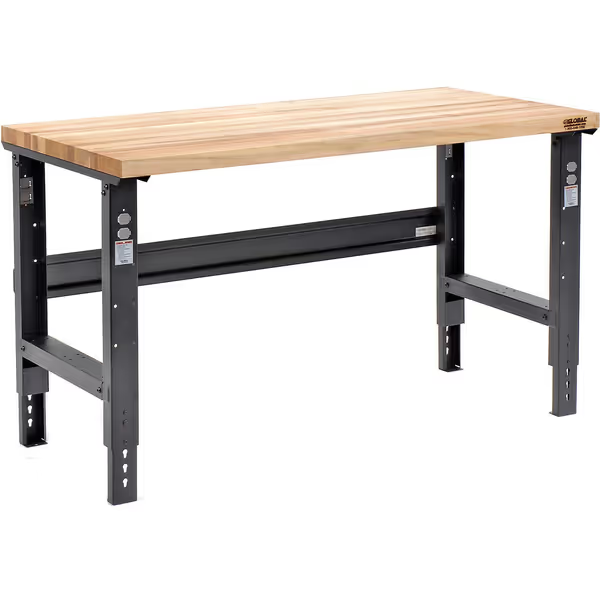
Global Industrial Adjustable Workbench
Adjustable height workbench with robust capacity for diverse tasks and ergonomic comfort.
$413.01
Weight Capacity2000 lbs.
Weight Capacity2000 lbs.
Pros
Height adjustable steel legs prevent back strain.
Thick birch top ensures flatness and durability.
Integrated electrical knockout simplifies power access.
Cons
Assembly required; hardware included.
Outlet not included.
Customers find the workbench to be solid and well-made.
Customers find the workbench to be solid and well-made.
- "Does it integrate with my safety workflow?" An ANSI certified workbench with poorly placed dog holes forces awkward clamping angles, creating ergonomic hazards. Match dog-hole spacing to your common workpiece sizes. If it can't handle 4' x 8' sheet goods without a wobble, bin it.
Overbuild the interface; let precision handle the finesse.
Q: What are the top 3 compliance blind spots for DIY/maker shops?
A: In my 15 years of field builds, these cause 80% of downtime:
-
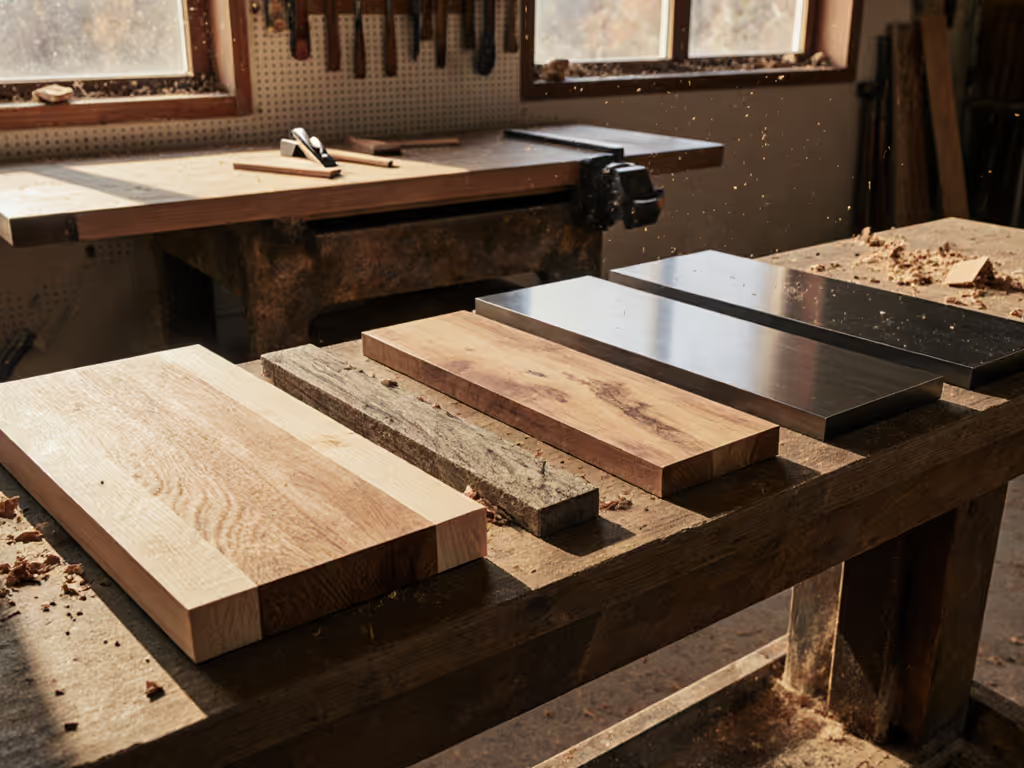
Ignoring humidity-induced drift: That beautiful hardwood top? In a 40-80% RH swing, it'll cup 1/16", killing glue-up accuracy. Solution: Use laminated tops or mandate resurfacing protocols. If your shop battles humidity swings, start with our humidity-resistant workbench guide. My shop's protocol: micrometer-check flatness weekly. If variance >0.003", resurface immediately.
-
Casters that compromise stability: OSHA 1910.176(b) requires secure storage. Mobile benches must lock rigidly, no "slight wiggle." Test: Apply 50 lbs of force to the top corner. If it shifts, caster locks are inadequate. Pick the right wheels and mounting with our workbench caster system guide. Bolt casters to a sub-base for true rigidity.
-
Electrical shortcuts on steel frames: Subpart S requires verified grounding. Field verification: Use a multimeter across the frame and outlet ground. Anything >1 ohm resistance? Rewire it. No exceptions.
Remember: Compliance isn't checked until after failure. Build for the worst day, not the best.
The Verdict: What Truly Matters for Workshop Compliance
Forget chasing "OSHA workbench requirements." Focus on demonstrable performance: racking resistance, flatness retention, and repairability. Workbench safety standards exist to prevent your bench from becoming the constraint, a lesson drilled into me when a flimsy unit wasted half a film set build day.
- ANSI certified workbenches are only as good as their test data. Demand racking resistance numbers, not just "compliance."
- CE safety standards force resilience against real-world abuse but require vetting actual test reports.
- Serviceable beats sealed in every workshop. Bolted > welded. Replaceable tops > monolithic designs.
Your goal isn't a certificate on the wall. It's a bench that disappears during the work, holding true while humidity swings, clamping forces, and time beat against it. When you achieve that, compliance follows. Choose like your next glue-up depends on it (because it does).
Final tip: Audit your bench quarterly. Push it sideways. For permanent stability, learn simple workbench anchoring methods. Check flatness. Verify grounding. If it passes without recalibration, you've built something that earns its place in the workflow.
Related Articles