Quiet Urban Workbench: Compact Designs for Apartments
By Taro Nakamura • 23rd Feb
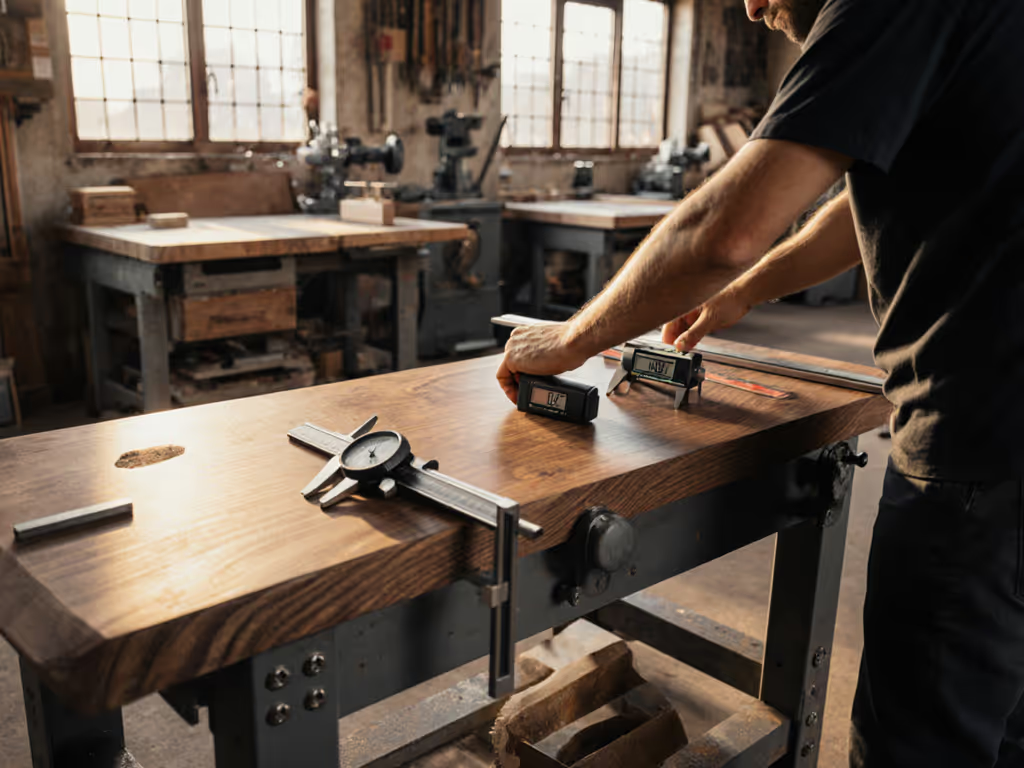
Building serious woodworking into apartment or small urban space means solving two hard problems at once: fitting a workbench woodworking setup into a footprint the size of a closet, and doing it quietly enough that neighbors and household members don't lose their minds. This isn't boutique problem-solving, it's a hard constraint that eliminates half of what works in a suburban garage. That said, constraint breeds clarity. The best urban benches aren't novelties; they're stripped-down, mission-driven designs that disappear into the workflow and never trade away the fundamentals: flatness, stiffness, and rock-solid workholding. For specific space-smart picks, see our compact workbench comparison.
I'm starting from ten years of building on sets and in shared spaces where a bench collapse mid-glue-up costs everyone time and swearing. Overbuilt the interface; let precision handle the finesse. That ethos matters here more than anywhere else. An apartment bench isn't a statement; it's a tool that has to deliver without excuses and live in the same space as couches and dinner tables.
The Design-Intent Split: Understanding What You're Actually Building
Before comparing specific approaches, you need to understand the core split in how compact benches are conceived. Every serious urban bench falls into one of three buckets, and each trades different things away.
The Furniture-First Approach: Hidden Storage, Permanent Placement
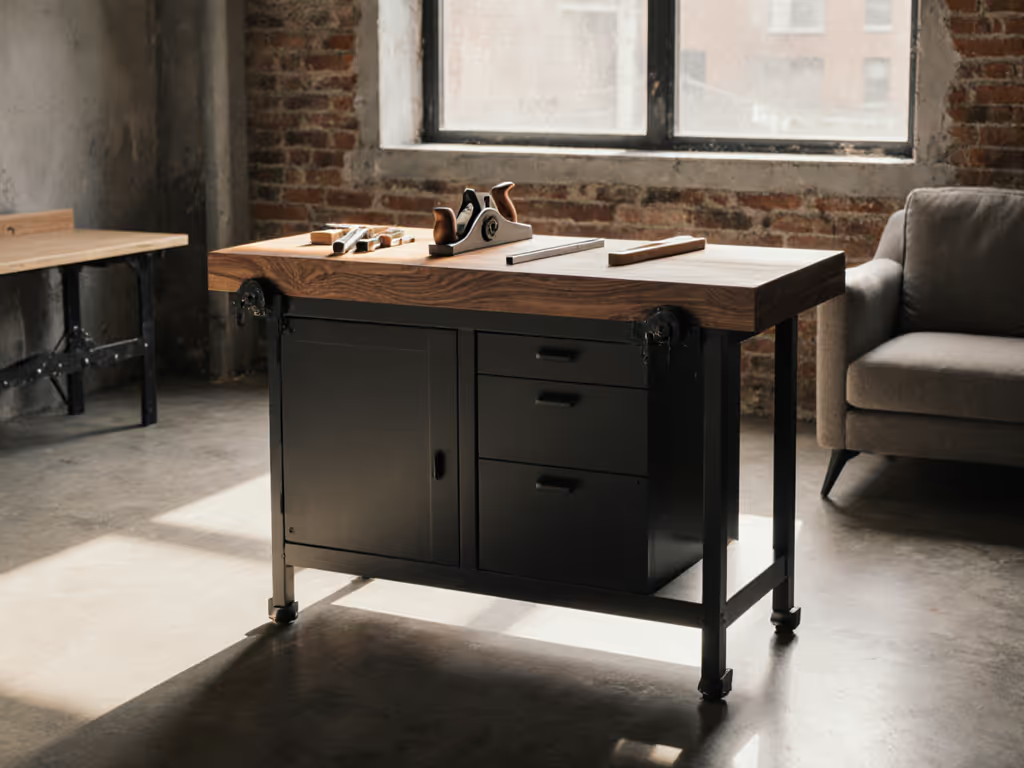
The Lee Valley Apartment Workbench represents the furniture-first philosophy. It's a self-contained hutch (47" × 19" × 36" tall when folded closed), resembling fine furniture more than a workbench. Open the hinged panels, and a concealed benchtop (38" long by 10" wide plus a trough) slides into view, backed by six small and four large drawers arranged below. This is the "it lives in the living room and nobody notices" category. If you're choosing between a wall-anchored setup and a standalone footprint, compare wall-mounted vs freestanding workbenches.
The core appeal is maintenance of domestic peace. Closed, it's indistinguishable from a cabinet. Open, you have a working surface with integrated tool storage. But here's the catch: a 38" top is short for general work, the 10" depth is tight for assembly or planing anything wide, and the compact footprint means there's nowhere to brace your body or manage larger stock. This works for detail work, small repairs, or finish-carving (tasks where the constraint becomes irrelevant). For through-mortises, panel glue-ups, or anything requiring sustained clamping force, you'll feel the cramped geometry almost immediately.
The noise profile here is favorable. A solid furniture enclosure with drawers closed naturally dampens vibration transmission into walls. The trade-off is that you've built a cabinet first and a bench second, and that reversal of priorities shapes every limitation.
The Compact-Traditional Approach: Real Workbench, Real Constraints
Benches like the Fanger Woodworking compact traditional design take the opposite route: build a proper bench scaled down. Front vise, side vise, dog holes on the front for additional clamping, integrated tool storage, and hand-tool performance that doesn't compromise on principle. You get real stiffness in the base structure and a top sized for actual work, just smaller.
This design respects the fundamentals. You're not trying to hide or miniaturize the core function; you're building a real workbench that happens to fit in a smaller footprint. The trade-off is honest: it looks like a workbench (so no hiding it), and it occupies floor space permanently. But when you put a hand plane under power or drive chisels into a mortise, the structure responds like a proper bench.
Noise generation is higher here because the structure is optimized for rigidity, not dampening. However, mass and materials can mitigate. Solid-wood bases with lag bolts and proper seating rarely rattle. Metal hardware stays silent when fitted tight.
The Mobile-Modular Approach: Flexibility as Trade-Off
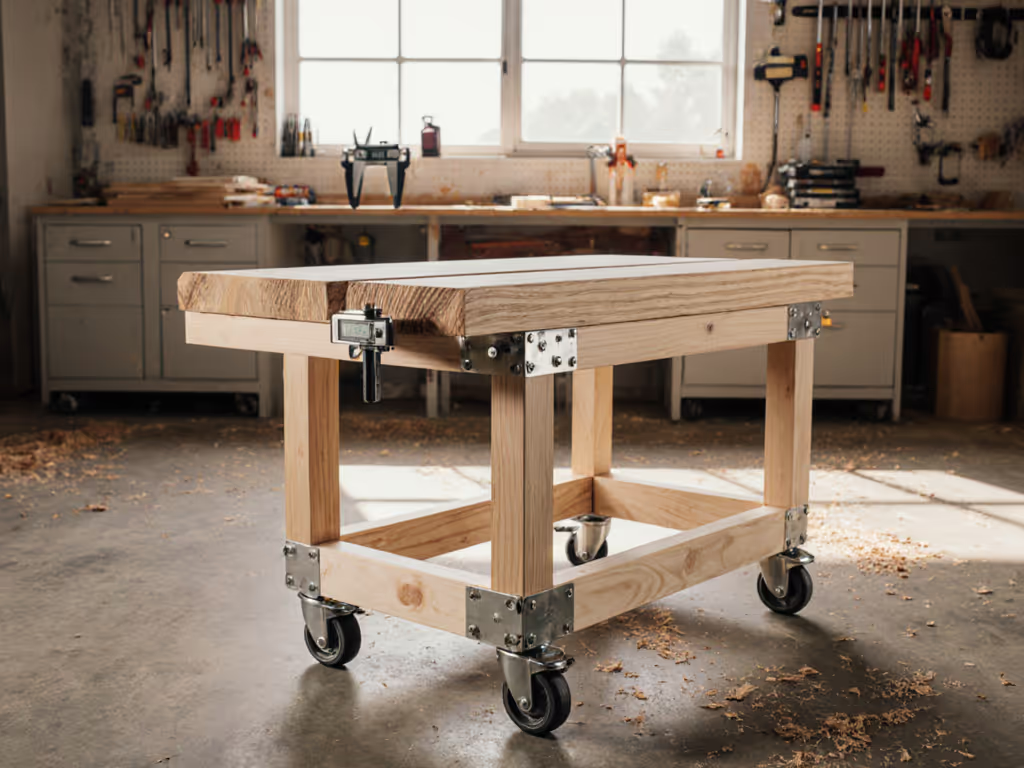
The Wood Whisperer's mobile bench design and the budget portable bench pursue a third path: maximum flexibility at the cost of some compromises on feel and long-term flatness. Plywood or laminated bases, lightweight MDF tops (multiple layers glued), knockdown joinery using dowels or dominoes, and casters that allow reconfiguration and storage. Built quickly, moved easily, and affordable in iteration (important if you're teaching or running multiple work stations).
When mobility is the goal, you get a bench that stores vertically, tucks into a corner when not in use, and can roll to wherever the task is. Casters introduce a new variable, though: the bench wants to shift under side-loading (planing pressure, vise work, or assembly clamping). Engagement mechanisms help, and weight addresses the issue (more mass resists deflection), but you're fighting physics. A mobile bench is never as stiff as a fixed one.
Noise behavior here depends on detail. Knockdown bases with bolts and dowels, when fitted properly, stay silent. However, caster wheels on concrete or hard flooring transmit vibration into the room. Rubber wheel types help. The real advantage for sound control is the ability to move the bench away from shared walls during noisy tasks, then park it elsewhere when done.
Performance Criteria That Matter for Urban Work
Once you've picked a design philosophy, you need to measure it against failure modes that actually show up in tight spaces.
Flatness Under Loaded Clamping
An apartment bench will spend disproportionate time held in vises and clamps because you can't spread work across a large surface. A planing stop or a holdfast sees repeated, concentrated load. The question: does the top stay flat when you're wringing a glue joint or backing a plane with force?
Multiple layers of MDF glued with contact adhesive or a vacuum press (as in the Wood Whisperer method) will remain flat through moderate use. Solid wood benchtops require attention to orientation and seasonal movement, but they're more repairable if they do cup or drift. Either way, the base has to resist racking. A plywood base with proper bracing and heavy enough footprint stops the top from flexing downward into a question mark when you clamp hard.
Uptime beats cleverness: a bench that stays flat without fussing is worth more than one that requires shimming every season.
Vibration and Structure-Borne Noise
Shared walls and floors in urban settings mean vibration travels. Hand-planing a board on a lightweight bench rings the whole apartment. Chisel work or mallet strikes transmit into the structure like a tuning fork. There are no magic solutions, but design choices matter: For apartment-friendly strategies that actually reduce structure-borne noise, see our vibration-damping workbench guide for shared spaces.
- Mass: A heavier bench bleeds off vibration energy better. Plywood bases are denser than solid wood when properly laminated. Lead or steel plates mounted under the top add damping without taking up space.
- Decoupling: Casters with isolation pads (rubber or cork) reduce direct contact with the floor. A bench suspended on a cushioned platform (even pads under the feet) helps, though you sacrifice some stability.
- Top composition: Three layers of 1" MDF laminated together acts as a vibration sink, better than a single solid slab for noise damping. Thicker is not necessarily quieter; construction method matters more.
- Tightness: Loose joints, rattling hardware, and poor seating create audible buzz. A knockdown bench that's bolted and doweled properly stays silent; one that's sloppy transmits every impact into the room as noise.
The Apartment Workbench design has an inherent advantage: the cabinet enclosure and closed drawers act as a barrier, turning the bench into a sound box that contains rather than radiates vibration. It trades openness and workflow simplicity for peace.
Workholding Density in a Small Footprint
When your benchtop is 38" or less, clamping efficiency becomes critical. You can't spread work across eight feet and use gravity and reach to position bodies comfortably. You need multiple hold-down points close together.
Dog holes on the front face (as in Fanger's design) allow a series of planing stops or holdfasts to work in rapid sequence without repositioning. A tail vise that swings in perpendicular to the front vise multiplies clamping geometry. A trough or well on one edge can capture curled stock or act as a reference surface without stealing bench length. These aren't luxuries; in a constrained space, they're the difference between a functional bench and one that frustrates every other task.
The Lee Valley hutch design lacks this density because the geometry simply won't accommodate it. The side-opening drawer configuration and narrow depth mean vise placement is fixed and limited. You're not gaining workholding; you're gaining storage at workholding's expense.
Build vs. Buy: Time, Skill, and Longevity Trade-Offs
DIY Build With Plans
The Lee Valley plans are detailed and structured for intermediate builders with modest tool access. You source your own lumber and hardware, cut to plans, and assemble. Timeline: 40-60 hours, split across weekends. Cost: $300-600 depending on wood grade. Result: customized to your space and wood preference, deeply understood.
The open-source compact benches from channels like Fanger and The Wood Whisperer offer free or low-cost plans. Build time is similar; costs are often lower because the designs use plywood and MDF (affordable, stable, and available everywhere). The trade-off is precision in assembly. A poorly cut dowel hole or misaligned bolts introduce racking into a knockdown base. If you're building four benches (as the Wood Whisperer did), practice and jigs flatten the curve; for a single build, expect some trial and error.
Kit Assembly
Pre-cut kits (hardware and materials pre-sized, top factory-laminated) collapse build time to 8-16 hours and reduce skill barriers. Cost runs $600-1200. You're trading labor for certainty and convenience. Flatness and hardware quality are guaranteed, not variable.
Ready-Made Compact Workbenches
Pre-assembled urban benches (usually MDF top on a hardwood or steel base, in 36-48" widths) run $1200-3000. Setup is an hour. Uptime starts immediately. The compromise: you're locked into the design, base height, and vise orientation. If it doesn't fit your specific workflow, you're stuck. However, major brands offer warranty coverage and replacement parts, which matters for long-term reliability in shared housing where you can't easily strip and rebuild.
Sound Dampening and Neighbor Relations: Practical Strategies
None of the bench designs listed are inherently silent. You need to layer control methods:
- Floor isolation: Cork or rubber pads under feet or under casters break the direct path to subfloors and shared walls. Cost is minimal; impact is real.
- Tactical scheduling: Heavy work (planing, mortising, frame assembly) during daylight hours or mid-week when impact is distributed. Reserve evening and weekend use for glue-ups, finishing, and hand tool work.
- Top material choice: MDF layers absorb impact better than solid wood and don't ring as easily. A removable felt or rubber surface layer on top adds cost but acts as a strike-dampening interface.
- Enclosed storage: Drawers and cabinets containing hand tools and hardware reduce audible clatter when moving stock or accessing fasteners. The Apartment Workbench enclosure has this advantage built-in.
- Vise and hardware selection: A smooth-running vise (well-oiled, tight tolerances) is quieter than a clanky one. Lead-free bronze or steel hardware bedded tight in wood stays silent; loose bolts and stamped fittings buzz and rattle.
The deeper point: sound control isn't a single design decision. It's a system. A tiny bench in a cabinet still transmits noise if your vise is sloppy or the base rests directly on a shared floor. If your bench lives above grade, review safe limits in our upper floor workshop load guide before adding mass or concrete tops.
Space Integration: Workflow and Adjacent Functions
An apartment shop rarely lives in isolation. The workbench shares space with outfeed for a table saw, finishing stations, metal or electronics work, or hand-tool sharpening. How does each design handle that integration?
- Furniture-first (Apartment Workbench): Closed, it leaves the surrounding floor clear for other tasks or equipment. Open, it occupies about 50 square feet including knee space. For a dual-use space, this is elegant, bench disappears when not in use. Downside: bench and storage are integrated, so you can't position the bench in an ideal light or angle and park storage elsewhere.
- Compact-traditional: Occupies the same floor space (roughly 4' × 2') whether active or idle. If you're teaching or running multiple benches (as in The Wood Whisperer context), that footprint stacks or nests. For a single-user apartment, it's permanent real estate.
- Mobile-modular: Flexibility is the whole premise. Roll it to different walls, tuck it into a corner, even stand it upright for storage (depending on design). For a maker who transitions between hand tools, power-tool assembly, and finishing, this agility can streamline workflow, no repositioning stock when changing tasks; reposition the bench instead.
Cost, Longevity, and the Hidden TCO (Total Cost of Ownership)
Here's where urban constraints bite hard: a bench isn't just the bench.
- Vises: A quality front vise runs $200-500 alone. A tail vise adds another $200-300. Budget benches sometimes cheap out on vise quality, and a poor-performing vise (wobble, inconsistent jaw pressure) is worse than no vise.
- Clamping accessories: Dogs, holdfasts, stops, T-nuts, and bolts add $100-300 if you're not already stocked. Urban makers often need more clamping density per square inch, so the spend is above average.
- Tops and resurfacing: MDF lasts 5-10 years under moderate use; solid wood lasts 20+ but requires periodic flattening. A resurfacing kit (sandpaper, hand plane, or jointer service) costs $50-200 and takes a day per decade. Plan for it.
- Base maintenance: Bolts loosen, dowels compress, and paint chips. A $50 maintenance kit (extra bolts, dowels, finish touch-up) and two hours per year keeps the bench silent and stiff.
Total cost of ownership for an apartment workbench over 10 years: expect $1500-3500, including the bench, vises, accessories, and routine maintenance. That's $150-350 per year. Knowing this up front helps you pick a design and budget that fits without regret.
Related Articles