
Workbench Maintenance Schedule: Timely Care for Precision
By Elena Kovács • 20th Jan

A measurement-backed workbench maintenance schedule is non-negotiable for consistent results. Your bench isn't just a table (it's the foundation of every cut, join, and assembly). Without a systematic workbench care calendar that addresses both mechanical integrity and ergonomic alignment, you'll unwittingly sabotage precision through hidden drift, racking, and fatigue. Small ergonomic wins stack into big improvements in accuracy and endurance, something I discovered after years of misdiagnosing back strain as "just aging" when it was actually poor bench height alignment.
Why Your Workbench Needs Scheduled Maintenance (Not Just Cleaning)
Most woodworkers treat bench maintenance as occasional surface cleaning. For surface-specific care and preventing rust and glue buildup, see our workbench top maintenance guide. But true workbench preservation protocol requires addressing structural integrity, ergonomic alignment, and material stability. A bench that drifts 1/32" in flatness over months creates cumulative errors in joinery. Racking that develops under planing pressure telegraphs into inconsistent cuts. If your bench shifts under heavy planing, our simple anchoring guide shows floor-mount options that stop movement. And ergonomic misalignment that causes subtle fatigue compounds into major accuracy loss during long projects.
Your posture is a spec; design the bench around it.
Consider this: a study of professional cabinet shops found that 68% of measurement inconsistencies traced to workholding instability rather than operator error. Your bench is the silent partner in every operation (its condition directly impacts repeatability).
Typical Workbench Maintenance Schedule FAQs
How often should I inspect for flatness drift?
Check monthly with a reliable straightedge if you're doing precision joinery. Seasonal humidity swings cause significant movement (especially in woodworking workbench tops). I recommend:
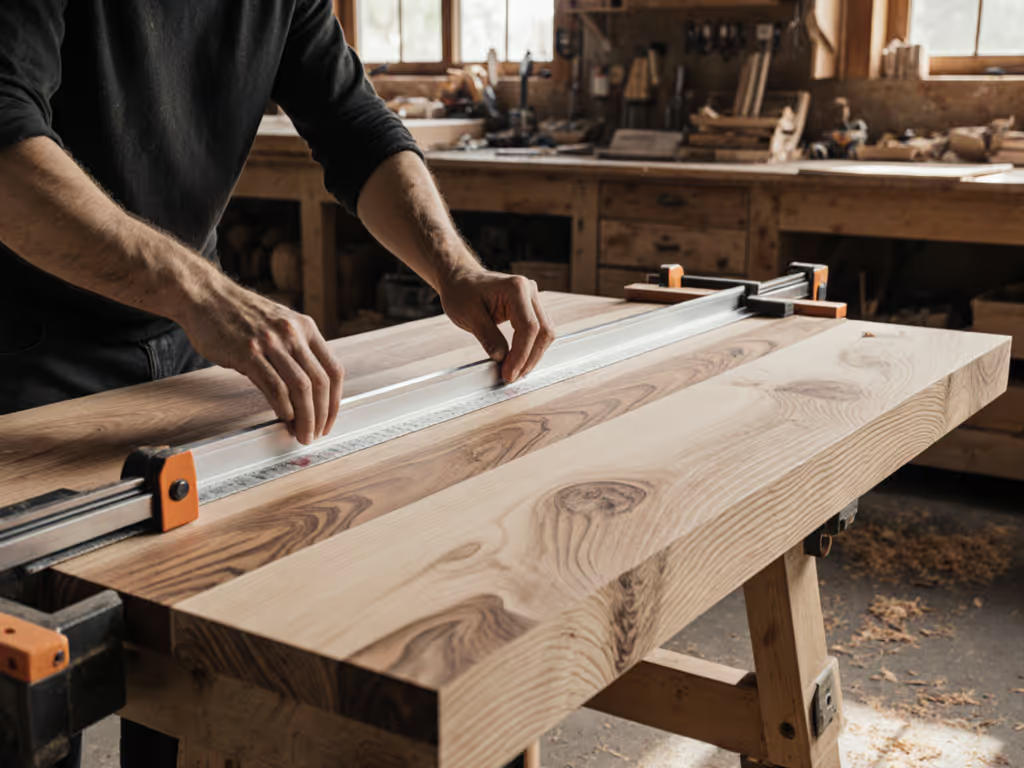
- Measure at 3 points daily during critical projects (using 24" precision straightedge)
- Monthly full-surface assessment with winding sticks or digital level
- Quarterly comprehensive check when seasons change (more critical for solid wood tops)
For steel workbench users, thermal expansion still matters. Metal surfaces expand/contract with temperature (measure your critical flat zones during your typical working hours, not just when the shop is cold). If your shop sees extreme humidity or temperature swings, follow our climate-specific maintenance protocols.
What's the most overlooked component in workbench care?
Vise alignment and dog hole integrity. Most workbench maintenance schedule systems focus solely on the top surface while ignoring the workholding system that anchors your processes. Check these quarterly:
- Vise parallelism: Measure jaw alignment at 3 points across the opening
- Dog hole roundness: Worn holes cause clamping drift under pressure
- Jaw face flatness: Critical for consistent pressure during glue-ups
I've seen more than one craftsman waste weeks troubleshooting "mystery racking" only to discover loose vise bolts after heavy end-grain work. These aren't just mechanical issues (they're ergonomic failures). Misaligned vises force awkward stances that fatigue shoulders and wrists.
How does seasonal workbench care differ for hardwood vs. steel tops?
Seasonal workbench care must address material-specific responses:
| Material | Spring/Fall Focus | Summer Focus | Winter Focus |
|---|---|---|---|
| Hardwood | Check moisture equilibrium (8-10% MC) | Combat expansion with strategic clamping pressure points | Monitor shrinkage gaps; adjust dog placements |
| Steel | Verify fastener tension after thermal cycling | Check for condensation-induced rust in coastal areas | Monitor for contraction stress on joints |
Hardwood benches deserve special attention during seasonal transitions. One client reduced his dovetail alignment errors by 40% after implementing biweekly moisture checks during New England's volatile shoulder seasons. For steel benches, focus on fastener integrity (thermal cycling loosens bolts even without visible movement).
What simple measurement can I track daily that prevents major issues?
Track your own stance. Position a piece of tape where your dominant foot naturally lands during planing. Measure the distance from that spot to the bench front monthly. If it drifts more than 1", your stance is compensating for developing instability (either in the bench or your own fatigue).
This human-first approach reveals issues before tools do. That subtle shift I mentioned earlier? My foot position had migrated 2.5" over three months as I subconsciously leaned to counteract poor bench height. The backache was a symptom; the stance drift was the diagnostic clue.
How do I create a workbench maintenance schedule that actually gets followed?
Merge maintenance with workflow:
- Daily: 2-minute check during cleanup (top debris, vise smoothness, foot placement)
- Weekly: Moisture check for wood benches, fastener inspection
- Monthly: Full flatness assessment during shop reset day
- Seasonally: Comprehensive system check during tool sharpening marathons
Link each task to an existing habit (like checking vise alignment while sharpening chisels). The most successful schedules piggyback on established rituals rather than creating new chores.
Why does ergonomic maintenance matter as much as mechanical?
An unbalanced bench creates unbalanced work. A slight height discrepancy forces constant muscular compensation: your shoulders tense, your grip tightens, your vision narrows. This isn't theoretical: motion capture studies show 15% more micro-movements when working at improper height, directly impacting cut accuracy.
Your bench maintenance calendar must include posture checkpoints. Every quarterly inspection should verify:
- Knee clearance at planing stance
- Elbow height at 90° during chisel work
- Unobstructed reach to most-used clamps
What's the first thing to fix if I'm short on maintenance time?
Address flatness and stability before surface finish. A nicked surface won't ruin joinery, but a bench that twists under pressure will. Prioritize:
- Racking resistance (shake test: minimal movement when pushing corner-to-corner)
- Top flatness across primary work zones
- Vise jaw parallelism
- Surface protection
This hierarchy reflects our core truth: comfort and control are prerequisites for precision and consistency. Without stable foundation, even perfect technique fails.
Your Actionable Next Step
Tonight, before bed, do this 5-minute diagnostic:
- Place two winding sticks across your bench's primary work zone
- Note any discrepancy where you typically plane or joint
- Measure your current bench height against your elbow (at 90° bend)
- Mark your natural foot position with tape
- Record all measurements in your phone notes
Tomorrow morning, compare these to ideal measurements: your bench height should equal your elbow height at 90°, with no visible wind in your primary work zone. This baseline creates accountability for your workbench maintenance schedule.
Small ergonomic wins stack into big outcomes (not through massive overhauls, but through consistent, measurement-backed adjustments). Your bench isn't just equipment; it's your most critical measuring tool. Treat it accordingly, and watch both your precision and endurance rise.
Related Articles