
Humidity-Resistant Workbenches: Climate-Specific Design
By Maya Iqbal • 23rd Mar
A humidity-resistant workbench isn't a piece of furniture. It is a machine engineered to hold its shape and function when moisture levels swing. If your shop sits in a basement, garage, or region where humidity swings from 40% to 90%, your bench will either stay flat and locked, or drift with the seasons. Most benches do the latter. Let me show you why, and what actually works.
Why Humidity Destroys Ordinary Benches
What happens when wood gets wet?
Wood absorbs moisture from air. When relative humidity climbs, wood swells; when it drops, wood shrinks. This isn't slight. Pine tops swell 1/8" in humidity swings, throwing off glue-up tolerances and rendering dog holes misaligned.[4] That shift compounds under clamping pressure and temperature flux. I learned this the hard way during a volunteer rebuild of a community makerspace. Two benches looked identical on the showroom floor until we loaded them with sandbags and checked flatness with a dial indicator. One twisted like warm taffy; the other didn't flinch. The difference wasn't cost or brand paint. It was what sat under the surface and how the base sealed moisture out.[1] For a deeper look at base design and rigidity, see our workbench stability engineering guide.
Measure, don't guess. If you don't quantify flatness drift, you're blind to what's happening below your plane iron.
Why the underside matters more than the top
Traditional wooden benches leave the particleboard core exposed on the underside or paint it carelessly. Moisture infiltrates from below, causing uneven swelling and warping.[1] The moisture is the only reason tops warp. Bench manufacturers who seal only the top are playing half the game.
Which materials fail in humid conditions?
Unfinished wood or MDF absorb liquids quickly and warp or stain.[5] Chemical-resistant laminate does not hold up as well to bacteria, corrosion, fungus, water, and moisture.[7] Steel develops surface rust that gums up vise threads within a season.[4] If you're weighing material trade-offs in humidity, our steel vs wood workbenches comparison details corrosion, cost, and maintenance impacts. A bench that telegraphs rust onto your mahogany panels is no bench at all.
FAQ: What Material Actually Works in Humidity?
Q: Should I use solid wood?
Solid wood works only if you control its moisture content before glue-up and maintain stable shop humidity. Most shops don't. True weather-resistant wooden benches need laminated tops, typically 2" thick maple, tested through multiple freeze-thaw cycles to verify flatness retention.[4] A 48" × 24" beech top with end-grain sealing can maintain ±0.020" flatness despite daily dew exposure when bench design isolates the top from moisture traps.[4] But this requires measurement verification. Buy a 4-ft level and moisture meter. Measure your intended site today. Knowing your actual conditions beats any marketing claim.[4]
Q: Is phenolic resin better than laminate?
Yes, measurably. Phenolic resin is highly resistant to chemicals, moisture, and heat, maintaining stability even with repeated exposure.[5][6] It can withstand continuous heat exposure up to 350°F and holds up well against impact and stress fractures.[2][7] High-pressure laminates are hermetic, preventing water infiltration beneath the surface and keeping moisture content minimal.[2] Phenolic is the standard in laboratories and environments exposed to corrosive substances because it doesn't warp, stain, or absorb liquid.[6] Chemical-resistant laminate is a step down; use it only for dry applications.[7]
Q: What about moisture-proof MDF?
Moisture-resistant engineered wood like UniMDF prevents swelling faster than regular MDF because wood fibers are mixed with special glue and compressed under high pressure and temperature.[3][8] Specifications typically cite <0.5% moisture-content swing in 30-90% RH cycles, verified via ASTM D4442 standard testing.[4] This is real. But a specification isn't proof until you measure it in your shop. UniMDF products carry PEFC, FSC, and ISO 9001 certifications, which signal process control (not performance in your space). Homogeneously sealed surfaces shed water instead of absorbing it, making moisture-resistant ply suitable for semi-outdoor benches under covered patios.[3]
Q: Do ESD surfaces affect humidity resistance?
Not directly. ESD-safe benches use conductive laminates designed to dissipate static charges across a carbon layer below the surface color.[1] These benches are common in electronics labs. Resistance is tested at 40-60% RH and typically falls within 10^6 to 10^7 ohms per square foot at 100 volts, measured with a Surface Resistance Meter (leads spaced 1" apart).[1] ESD control and moisture resistance are separate concerns. A bench can be both, but ESD topcoats don't inherently improve humidity performance. The underside sealing (aluminum sheet versus uncovered particleboard) is what stops moisture.[1]
How to Test Humidity Resistance Before You Buy
Step 1: Measure your shop's moisture conditions.
Walk your space with a cheap humidity meter over 30 days. Record highs and lows. If RH swings from 35% to 85%, you live in a humidity-challenged workshop. Most benches aren't designed for that range.[4]
Step 2: Demand flatness data under humidity stress.
Ask vendors: "What's the flatness drift measured in inches over a 40-90% RH cycle?" If they don't have tested numbers, they're guessing. Real manufacturers test benches using ASTM D4442 standards or similar. Freeze-thaw cycle testing (-10°C to 35°C over 12 cycles) is the gold standard for outdoor or semi-outdoor use.[4] No data? Move on.
Step 3: Check the sealing strategy.
Inspect the underside. Is it sealed aluminum, painted, veneered, or bare? Bare particleboard fails. Aluminum sheet offers redundancy and assures conductivity while preventing moisture infiltration.[1] Dense underside materials (not paper) are non-negotiable in humid climates.
Step 4: Verify dog-hole alignment stability.
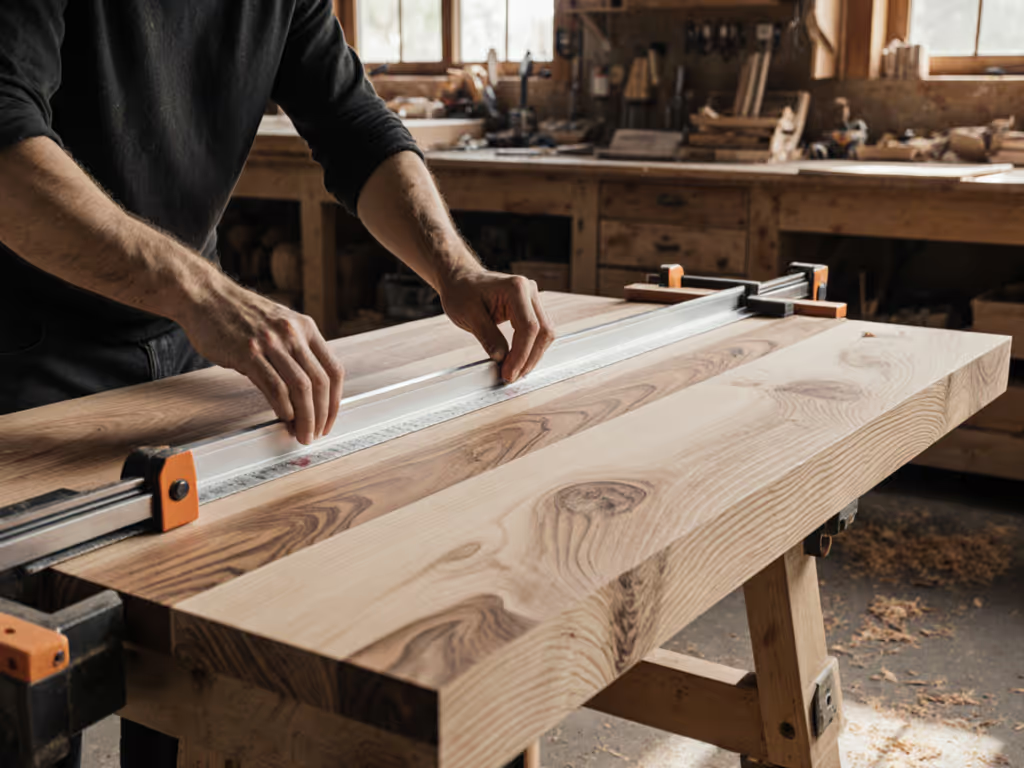
Clamp a straightedge across dog holes and measure gaps before and after a humidity swing. If alignment drifts >0.025", workholding will frustrate you for years. This is the detail nobody talks about until it ruins a glue-up.
Climate-Specific Design Choices
For tropical or high-humidity climates (65-90% RH year-round):
Phenolic resin or sealed maple laminate with aluminum underseal. Weight matters; denser benches (850-1150 kg capacity) resist racking under humidity-induced stress.[3] Avoid exposed fasteners and steel legs without corrosion protection. Galvanized steel over moisture-resistant cores creates tough surfaces that handle weather.[9] Modular T-track systems stay aligned even when humidity shifts, avoiding dog-hole misalignment.[4]
For variable climates (40-75% RH seasonal swings):
Moisture-resistant engineered wood with sealed edges works if you verify flatness annually. Accept ±0.050" drift as normal and shim or re-flatten once yearly. End-grain sealing that sheds water (not absorbing it) is critical.[4] Avoid untreated pine and MDF.
For cold, dry climates:
Solid wood becomes brittle and prone to cracking; engineered surfaces remain stable. Laminate or phenolic tops resist seasonal wood movement better than solid tops. Shop humidity below 30% RH is actually harsher on wood than high humidity (it locks the wood in a stressed, shrunk state).
The Upgrade Path
Control the variables, and the numbers will explain themselves. Start by measuring your current bench's flatness and moisture content at the surface and 3/4" deep.[10] Document RH and temperature in your shop over 90 days. For ongoing maintenance by region and material, use our climate-specific workbench care protocols to set a seasonal plan. Then, when you upgrade, choose a material rated for your actual conditions (not a generic "all-weather" claim). Replaceable skins let you start with affordable engineered wood and migrate to phenolic later. Standards-based interfaces (20mm dog holes, T-track, or 3/4" hole grids) let you swap tops without rebuilding the base.
Next Steps
Grab a 4-ft level, moisture meter, and dial indicator. Measure your intended site and your current bench's flatness at three humidity levels (winter, spring, summer). Document the drift in tenths of inches. Then decide: Can you tolerate seasonal shimming, or do you need a material that locks flatness? The answer lives in your measurements, not in marketing brochures. Build the capability you actually need, not the bench the internet tells you to want.
Related Articles