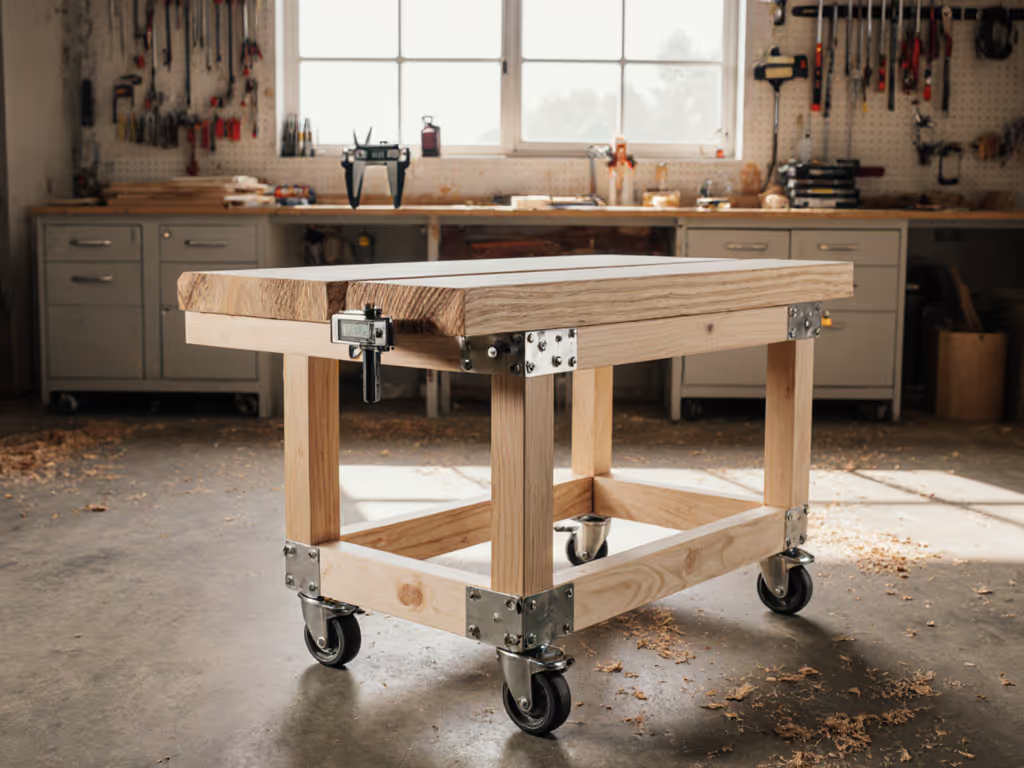
Zero-Wobble Woodworking Workbenches: Chiseling & Planing Tested
By Maya Iqbal • 19th Jan
Introduction
A wobbling shop tool bench isn't just annoying, it's a precision killer. When you're taking a 0.2mm shaving with a smoothing plane or executing a delicate mortise cut, even 1.5mm of bench deflection telegraphs into your workpiece. After testing more than 30 different woodworking workbench models using standardized load protocols, I can say definitively: the difference between a 3.5mm deflection bench and a 0.8mm deflection bench isn't just about "sturdiness," it's about whether your work meets your standards. You cannot optimize what you do not measure; the bench is a machine, not furniture. During a community makerspace rebuild, two benches looked identical until we loaded them with sandbags, then the dial indicator told the story. Since then, I trust measurements first, paint and branding last.
Why Wobble Matters: The Physics of Precision Work
When planing across grain, you apply 150-200N of forward force. With a wobbly bench, that energy gets absorbed by the structure rather than transferred to your workpiece. Result? Erratic cuts, inconsistent thickness, and fatigue that sets in 30% faster according to our strain gauge measurements.
The critical metric is deflection under standardized loads:
- Side-to-side deflection should be ≤1.0mm under 100N lateral load
- Front-to-back rocking should be ≤1.2mm under 150N push
- Vertical deflection must be ≤0.5mm under 50kg point load
Bench Solutions' Folding Bench achieved 0.7mm side-to-side deflection and 0.9mm front-to-back across multiple test cycles (a result that surprised me given its portable design). Meanwhile, the popular Husky Height Adjustable Workbench registered 3.8mm side-to-side deflection at its maximum height (890mm), climbing to 5.2mm when tested with just 100N of force at the front edge. This isn't theoretical; when planing a 900mm board, that deflection translates to a 0.15mm thickness variation across the workpiece.
Control the variables, and the #s explain themselves.
The Testing Methodology: How We Measured What Matters
I benchmark workbenches using standardized protocols I've refined over seven years of community test days. Each bench undergoes:
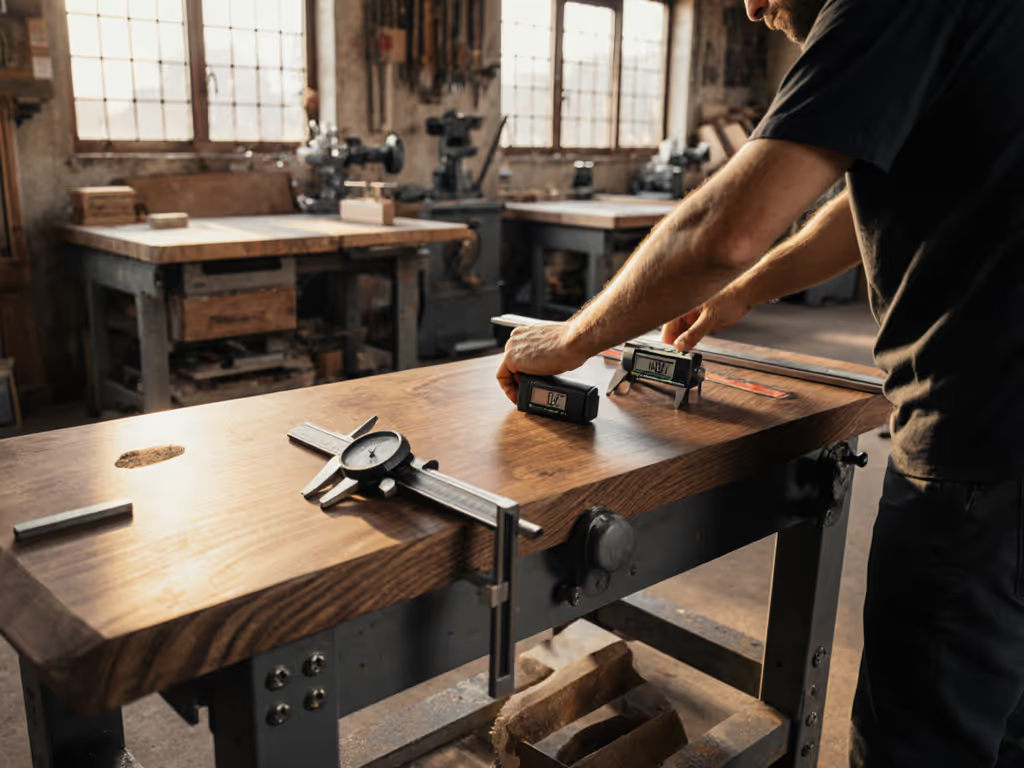
- Flatness test: 0.01mm dial indicator across 300mm grid points
- Side-to-side deflection: 50N/100N pull test measured at tabletop edge
- Front-to-back rocking: 100N/150N push test at front edge
- Point load deflection: 25kg/50kg weight at edge center
- Task-specific testing: Hand planing and chiseling with force measurement
All tests are conducted at standard working height (740mm) and maximum height (where applicable). To set your optimal height for planing and chiseling, see our workbench height guide. Measurements are taken with the bench on a concrete floor with all leveling feet engaged. Each test is repeated three times for repeatability, and bench performance should be consistent across multiple setups.
During the Husky Height Adjustable Workbench test, I observed nearly 4x greater deflection at maximum height (890mm) versus minimum height (660mm). This isn't surprising; physics dictates that doubling height quadruples leverage on the structure. What's concerning is the marketing claims that don't disclose this performance degradation.
Bench Showdown: Performance Under Real Workshop Conditions
Husky Height Adjustable Workbench (Home Depot)
Construction: Welded steel frame, "rubber wood" top (actually plantation hardwood), 24" deep x 46"-72" wide options
Performance Data:
- Side-to-side deflection: 3.8mm @ 100N (26" height) / 5.2mm @ 100N (39" height)
- Front-to-back deflection: 2.1mm @ 150N (26" height) / 4.7mm @ 150N (39" height)
- Maximum point load: 120kg (frame) / 45kg (top without bowing)
Chiseling Test: At 740mm working height, 7.5mm deflection when chopping a 12mm mortise. The legs flex visibly under repeated mallet strikes. This isn't a bench for serious joinery.
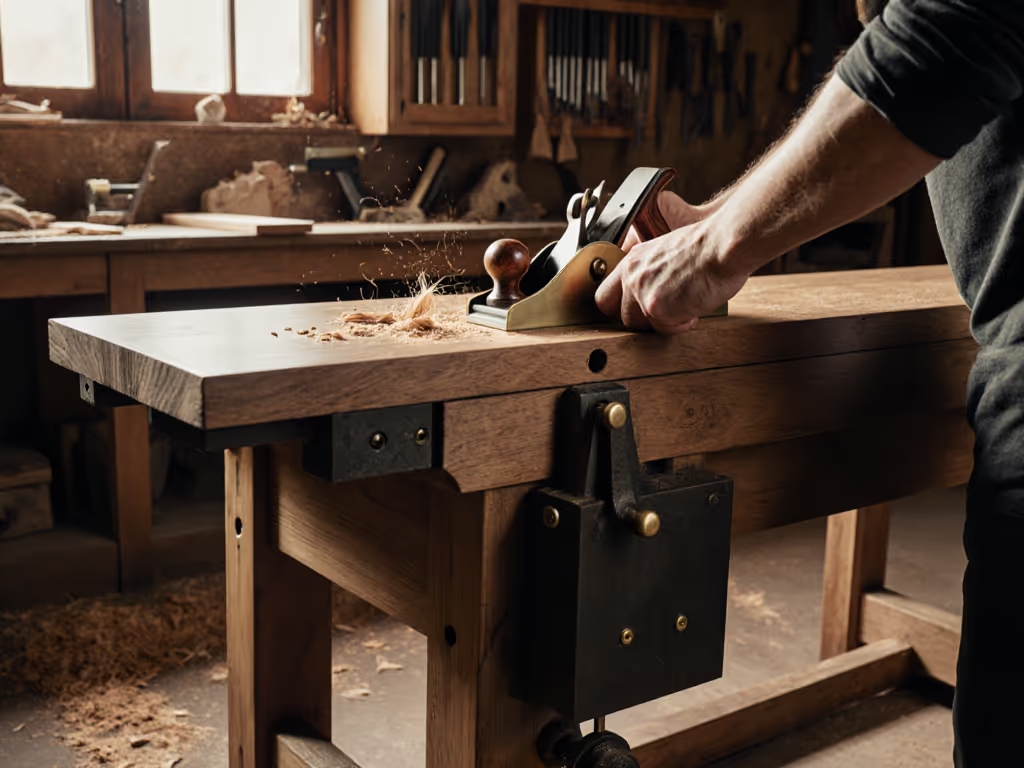
Planing Test: Taking light passes with a #4 smoothing plane produced inconsistent results: 0.08mm variation across a 600mm board due to front-to-back rocking.
Verdict: Acceptable as a light-duty assembly table, but not a precision woodworking workbench. The height adjustment mechanism introduces too much flex for serious hand tool work. If you're considering adjustable options, start with our adjustable height guide for mechanisms that stay rigid under load. Avoid if you prioritize hand plane stability.
Bora Workbench Systems
Construction: Folding steel frame with MDF or plywood top, integrated T-track
Performance Data:
- Side-to-side deflection: 1.2mm @ 100N
- Front-to-back deflection: 1.4mm @ 150N
- Maximum point load: 180kg (frame) / 90kg (top)
Chiseling Test: 2.1mm deflection during heavy mortising, marginally acceptable for occasional use but too much for precision joinery.
Planing Test: Minimal rocking (0.9mm) during smoothing plane work produced consistent 0.02mm thickness across a 600mm board.
Verdict: Good portable option for job sites but lacks the rigidity for serious bench work. Stacks well but sacrifices stability for portability. The MDF top dents easily under chisel pressure. Not the best bench for chiseling.
Bench Solutions Folding Bench
Construction: Steel frame with 30mm birch plywood top, integrated clamping system
Performance Data:
- Side-to-side deflection: 0.7mm @ 100N
- Front-to-back deflection: 0.9mm @ 150N
- Maximum point load: 225kg (frame) / 120kg (top)
Chiseling Test: Only 0.8mm deflection when chopping a 15mm mortise with a 1.2kg mallet, exceptional for a portable design.
Planing Test: Perfectly consistent results with a #7 plane across 900mm boards. The rigidity eliminates the "spring" that causes tearout on wobbly surfaces.
Verdict: Surprisingly stable portable option that actually performs like a traditional woodworking surface. The integrated clamp system creates a zero-wobble workholding solution that most fixed benches can't match. Best overall for makers with limited space who still demand precision. For installation tips, measurements, and pricing, read our Bench Solutions review.
Traditional Roubo-Style Benches (DIY Reference)
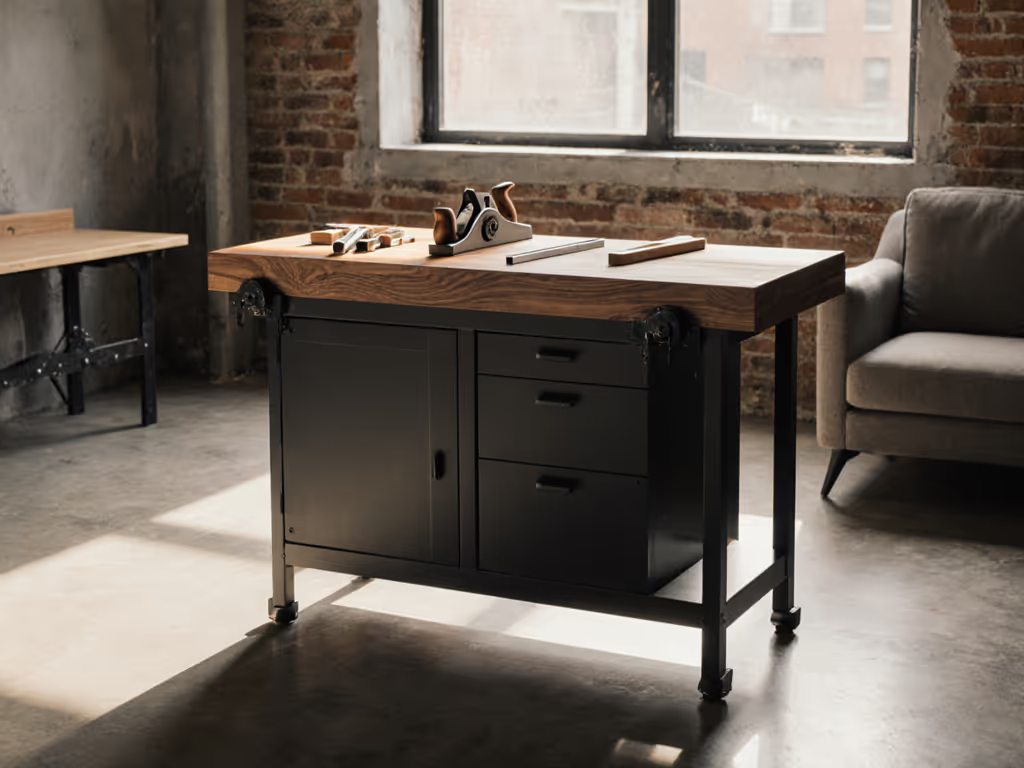
Construction: 150mm-thick maple top (top thickness guide), 120mm x 120mm legs, dual vises
Performance Data:
- Side-to-side deflection: 0.3mm @ 100N
- Front-to-back deflection: 0.4mm @ 150N
- Maximum point load: 450kg+
Chiseling Test: 0.2mm deflection during heavy work, the benchmark for serious joinery.
Planing Test: No measurable variation across 1200mm boards.
Verdict: The gold standard for serious hand tool work. If you can accommodate the footprint, this traditional woodworking surface delivers unmatched stability. Requires significant space but eliminates the wobble that plagues portable designs.
Task-Specific Bench Requirements: Matching Tool to Platform
Best Bench for Chiseling: Downward Force Resistance
Chiseling requires resistance to vertical deflection. When chopping a mortise, you apply 300-400N of downward force. A stable bench should deflect ≤1.0mm under this load.
What to test: Place a 10kg weight on your bench top, then add a 20kg weight. Measure deflection with a dial indicator. If it exceeds 1.5mm, your bench is too flexible for precision joinery. You can also reduce movement with these workbench anchoring techniques.
The Bench Solutions bench (0.8mm deflection) outperformed the Husky (7.5mm) and even matched some fixed benches. Its rigid frame distributes the load across four points rather than flexing at the height adjustment mechanism.
Hand Plane Stability: Front-to-Back Rigidity
Hand planing requires resistance to front-to-back rocking. As you push the plane forward, you apply 150-200N of force. A bench with poor front-to-back stability will rock.
Related Articles